


Stop Subsidence Before It is Too Late: Role of Underpinning Contractors and Structural Engineers
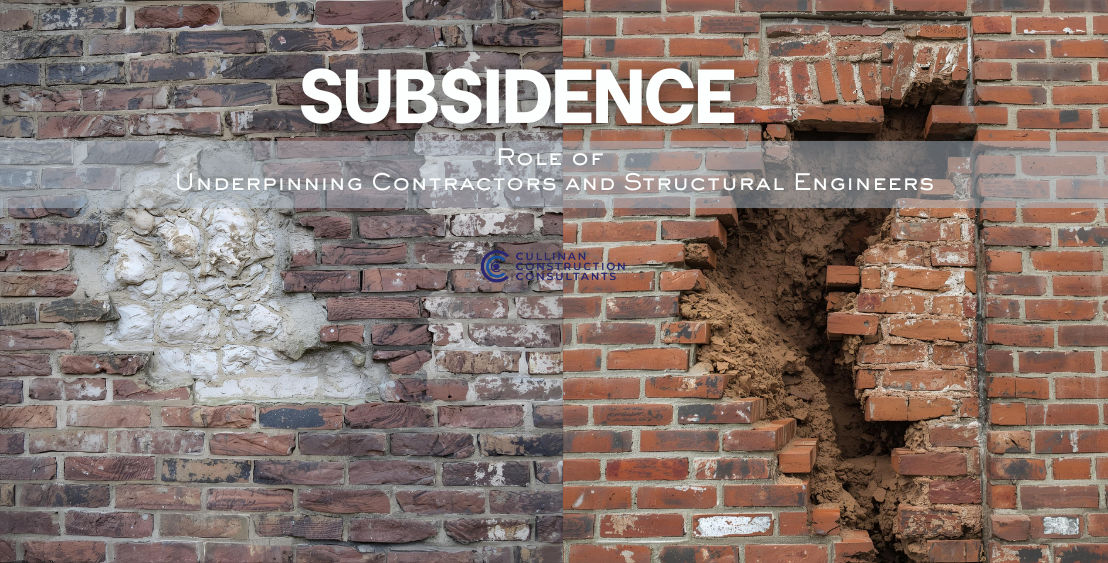
The Reasons why Subsidence is not to be ignored.
One of the greatest structural issues that a property can experience is subsidence. It happens when the soils underneath a structure start to sink or move resulting in the grounding of the structures and subsequent cracks or tilting of the structure on top of it.
A subsidence that affects thousands of homes in the UK annually, occurs particularly in regions where there is clay soil, old buildings or improper drainage systems.
Neglecting the warning signs may cause serious structural damages, expensive repairs, and even health related complications like dampness and moulds. This is why you act fast and our professional underpinning contractors and qualified structural engineers are here to help you.
What Is Subsidence?
Subsidence occurs when the ground on which the foundations of your building are resting collapses hence making the structure unstable. This movement may cause cracks on the walls, uneven floors or even separation of the extensions and the main building.
One should also learn the difference between subsidence and normal settlement.
Settlement normally occurs shortly after the construction because the soil tends to compress on its own.
Subsidence on the contrary is a chronic and may deteriorate with time unless it is managed accordingly.
More areas in the UK which have a high proportion of clay in the soil are particularly susceptible because of variations in moisture content depending on the season.
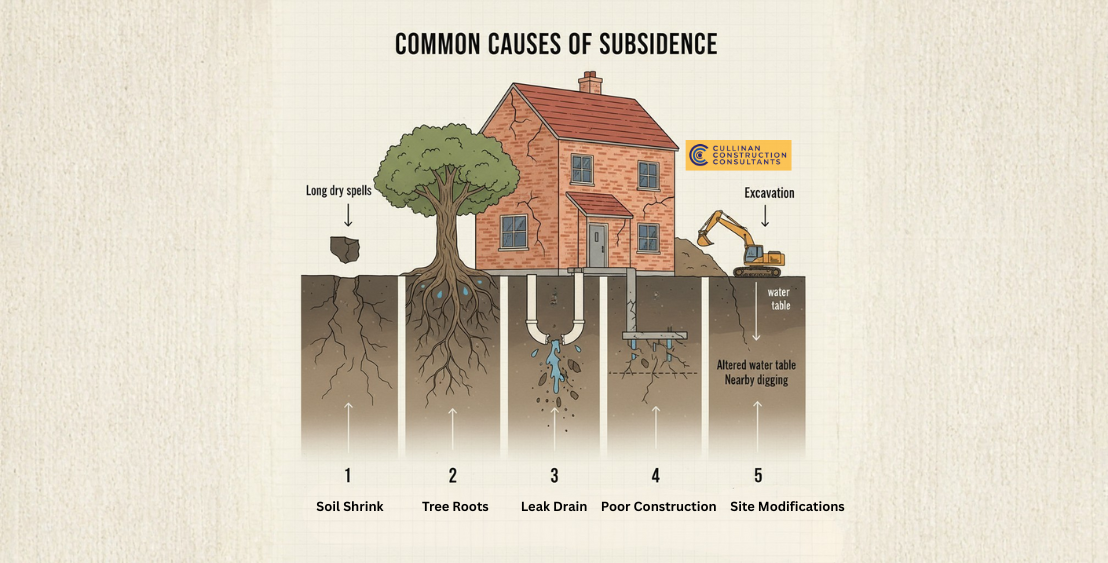
Common Causes of Subsidence
Subsidence may occur due to a number of reasons such as:
Soil shrinkage: Clay soils dry up and in the dry seasons, they shrink and do not stick to the foundation.
Tree roots: Large tree or shrubs near your property have the ability to draw the moisture out of the ground making the ground unstable.
Leaking drains or busting pipes: A continuous water leakage carries away tiny particles of soil under the foundation. Which is also known as erosion – this is due to washing away of soil beneath foundation.
Poor Construction: Shallow or weak foundations may not support the building in the long run.
Groundwater or excavation modifications: Localised construction or groundwater flow may also have an effect on stability.
A professional structural survey can identify the root cause before any repairs or underpinning work begins.
Warning Signs of Subsidence
The identification of the initial signs can save a lot of money that would be spent on the repairs in the future. Look out for:
- Inside or outside walls that have diagonal cracks particularly around door frames and window frames.
- Doors or windows that are sticking or out of position.
- Uneven or sloping floors.
- Gaps between skirting boards or window frames.
- Extensions detached from the main building.
In case you observe any of them, then you must call the structural engineer at once to carry an assessment. Our structural engineer services include on-site survey, load carrying analysis and professional advice to resolve movement safely.
Subsidence Health and Property Hazards of Not Reporting.
In addition to structural issues, subsidence may also affect the living environment:
- Damp entry holes and cracks enable moisture to penetrate and develop moulds that will initiate allergies or breathing issues.
- Setting the foundation may jeopardise your safety and decrease the total value of your property.
- The insurance premiums might be raised or failure to cover untreated structural problems might be experienced.
With the support of foundation underpinning contractors like Cullinan Construction Consultants, your home and family can be safeguarded again structural risks
The process of fixing Subsidence by Underpinning Contractors.
Underpinning strengthens and fixes the foundation that the property already has and avoids further movement. Various methods can be applied:
- Mass concrete supporting: Simple and economical, suitable with the superficial foundations.
- Beam and base underpinning: The load is distributed evenly throughout the structure by the reinforcement of the beam.
- Mini-piled underpinning: Where the conditions of the ground are unfavourable or the access is restricted.
At Cullinan Construction Consultants, the basis of our foundation, a team of contractors, is very keen to choose the best method once they examine your findings of a structural survey and the soil conditions. All solutions are design to meet UK Building Regulations and long-term safety standards.
The part of Structural Engineers in Repair of a Subsidence.
The structural engineer plays a central role in diagnosing and resolving subsidence. Their job is to:
- Perform a comprehensive structural survey to find and quantify movement.
- Examine load paths and find the degree of foundation damage.
- Develop a stabilisation or underpinning scheme which suits the property.
- Supervise building to guarantee safety, compliance and precision.
We as a structural engineer also design RSJ beams (Rolled Steel Joists), for your existing or new property – requiring opening for open plan or extension or loft.
How We Can Help You
We offer:
- Carrying out of extensive structural surveys in the UK to determine the level of damage.
- Professional recommendation on the most appropriate underpinning and repair solutions.
- Full project management design to construction.
- Determining the load bearing, lateral movement, shear forces, deflection, bending movement etc.
- RSJ / beam/ steel / RCC installation, load calculation and Building Control compliance support.
Whatever the size of those cracks, whether it is small cracks or large foundation movement, our trained structural engineers and underpinning contractors will make sure that your property is stable, safe and in compliance to the UK standards.
Contact us to have a professional assessment and an expert consultation on the issue before subsidence spreads.
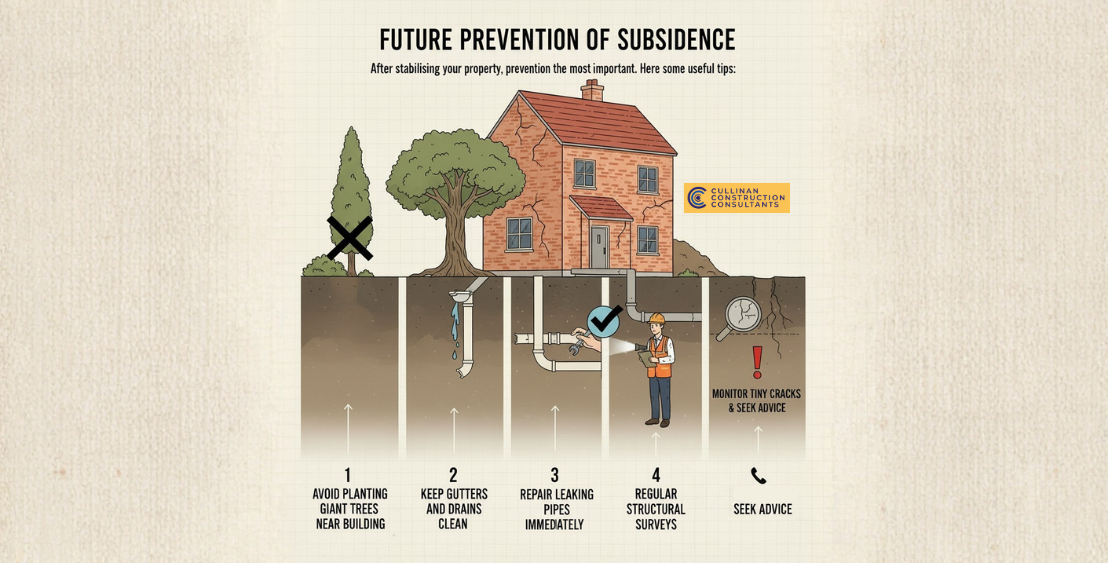
Future Prevention of Subsidence.
After stabilising your property, prevention is the most important. Here are some useful tips:
- Planting of giant trees near the building should be avoided.
- Drainage and gutters should also be kept clean to avoid the build-up of water.
- Repair leaking pipes immediately.
- Conduct regular structural surveys and particularly for older homes, homes with extensions or when purchasing a property in the UK.
- Keep an eye on tiny cracks and seek advice in case they become bigger or expand.
Preventative care saves money and reduces the risk of future structural instability.
Conclusion
Subsidence may be alarming, but it is not unfixable. Your home can be taken back to its complete stability and safety with the help of decent support of the underpinning contractors and professional structural engineers.
Our structural design services and foundation underpinning contractors combine technical expertise with a customer first approach. From identifying early signs to providing permanent solutions, we are here to protect your property’s strength and your peace of mind.
Don’t wait until it’s too late contact us today to arrange a structural survey and secure your home’s foundation.
Frequently Asked Questions (FAQ’s)
Diagonal cracks in walls, sticking doors or windows, uneven floors, gaps between skirting boards, or extensions detaching from the main building are common signs.
They strengthen your building’s foundation using methods like mass concrete, beam and base, or mini-piled underpinning depending on soil conditions and structural survey results.
Common causes include clay soil shrinkage, tree roots absorbing moisture, leaking drains or pipes, poor construction, and groundwater or excavation issues.
Yes. Structural engineers diagnose the root cause, assess foundation damage, design appropriate repair solutions, and supervise construction to meet UK building standards.
Related posts:
 Underpinning Contractors Explained: Protecting Your Property’s Foundations
 Listed Building Property Survey: A Complete UK Guide for Buyers & Owners
 8 Questions to Ask Before Hiring Structural Design Services
 Don’t Build Blind: The Essential Role of Construction Drawings in UK Building Projects
 How to Hire New Build Contractors in UK to Make Construction Phase Easy
Comments are closed