


Listed Building Property Survey: A Complete UK Guide for Buyers & Owners
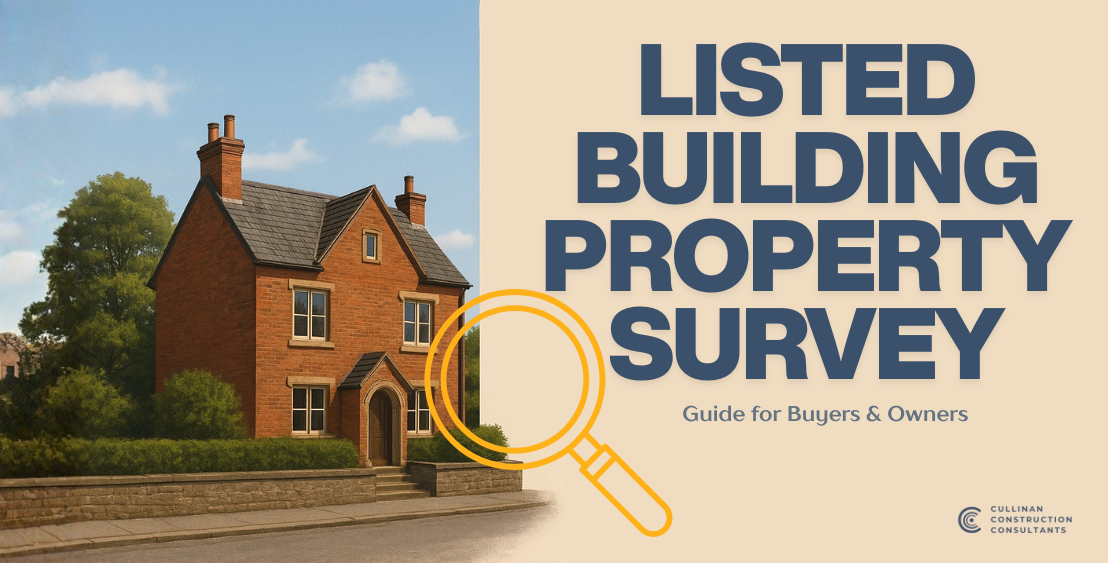
Buying or owning a listed building is a dream for many, but it also comes with extra responsibilities, hidden risks, and strict regulations. A standard property survey is often not enough for these unique heritage homes. That’s why understanding the right type of listed building survey is essential before you buy, renovate, or maintain a protected property.
Cullinan-UK assists property purchasers and owners in making informed and confident choices of historic and listed buildings using specialist surveys.
What Is a Listed Building?
A listed building is a building which has been officially designated as possessing special architectural or historic interest. Listed buildings in the UK are safeguarded under national law, i.e.
- You are not allowed to change them.
- Repairs should be performed in a proper manner.
- Contemporary substances can harm the construction.
- The legal problems might arise because of past unapproved changes.
This is the reason why all listed properties require a specialist property survey as opposed to a normal inspection.
The reason why a Standard Property Survey is not enough.
Normal homes will be appropriate to standard surveys (Level 1, Level 2, Level 3), but listed buildings need further research due to the fact that they frequently include:
- Timber beams
- Lime plaster
- Thatched or slate roofs
- Stone or brick walls
- Historic foundations
- Exceptional construction methods
They also tend to suffer:
- Moisture and damp
- Timber decay (wet rot, dry rot)
- Structural movement
- Cracks due to age
- Destruction due to previous repairs that were done improperly.
All these risks are analysed by a specialist listed building property survey.
Types of Listed Property Surveys (What We Provides)
The most popular survey types that we offer on heritage and listed properties are listed below.
1. Listed Building Full Structural Survey.
It is the most thorough inspection of old or historic houses. It includes:
- Comprehensive structural evaluation.
- Roof conditions, wall conditions, floor conditions, chimney conditions.
- Movement, settlement, cracking evidence.
- Mould, damp and moisture mapping.
- Analysis of timber rot and infestation.
- Preservation of historic materials.
- Impact of past alterations
This survey offers the buyers full satisfaction before they are committed to making a purchase.
2. Heritage Survey and Conservation Survey.
Strategized to suit the owners or buyers who intend to make alterations. This covers:
- What is covered by the law.
- Repairs which require Listed Building Consent.
- Advice on conventional materials (lime, oak, stone).
- Dangers of working with contemporary materials.
- How to plan the repairs properly.
Ideal when it comes to avoiding both costly mistakes or enforcement action.
3. Timber Survey and Specialist Survey.
The largest hazard to listed buildings is damp. We inspect:
- Rising damp
- Penetrating damp
- Condensation
- Roof leaks
- Timber decay (wet/dry rot)
- Woodworm and infestation
We also offer solutions in the form of breathable and conservation-friendly solutions.
4. Pre-Purchase Listed Building Survey.
Buyers who should be clear before making an offer or exchange. This includes:
- Full condition report
- Urgent defects
- Repair cost estimates
- Legal risks
- Unapproved changes in the past.
- Advice on possible renovations.
This assists you to make an informed safe decision.
5. Listed Building Consent & Planning Assessment.
We advise on:
- What changes need approval
- What work is forbidden
- Permission of the previous owners.
- Risks of enforcement.
- The planning of approved renovations.
This safeguards the customers against unforeseen problems.
The way Cullinan-UK Assists Property owners.
✔Periodic Condition Examinations.
To identify the initial symptoms of degradation.
✔ Guidance on Repairs
We suggest proper conservation-approved practices.
✔Hedge against Future Expenses.
Early prevention before structural damage occurs is costly.
✔ Applications to be assisted with.
We define what may and what may not.
Assistance to Property Buyers.
✔ Reduces Your Buyer Risk
Structural, moisture, timber, and legal problems are discovered prior to your commitment.
✔ Clear Cost Expectations
We calculate the possible cost of repairs, and thus you are aware of what you are getting into.
✔ Checks for Unapproved Work
Numerous historic buildings have unauthorized modifications – we draw attention to such dangers.
✔ Renovation Planning
We clarify what can and must be changed.
Why Choose us?
- Experience in heritage buildings.
- Traditional material knowledge.
- Stepwise structural and moisture analysis.
- Clear and simple to understand reports.
- Pre- and post-survey support.
- Securing the building and your investment.
We guarantees that you make the right choices when purchasing, renovating or maintaining a listed property.
Conclusion
A listed building property survey is not only an examination it is a vital measure in the preservation of a historic house. Listed buildings demand expert knowledge with more risk, stricter legal regulations, and sensitive materials.
We presents the experience, transparency, and trust that you require.
Frequently Asked Questions (FAQ’s)
Yes. A listed building always requires a specialist property survey. Standard Level 1, 2, or 3 surveys are designed for modern construction and often miss risks linked to historic materials and methods. Listed buildings are legally protected, and any defects, past alterations, or repair methods can have serious financial and legal consequences. A specialist survey looks beyond condition and focuses on conservation, compliance, and long-term risk.
A listed building property survey provides a detailed assessment of both the structure and its historic fabric. This typically includes an inspection of roofs, walls, floors, chimneys, and foundations, along with checks for damp, timber decay, movement, and cracking. It also reviews previous alterations, identifies inappropriate modern repairs, and explains how historic materials such as lime plaster, stone, and timber are performing. The report highlights urgent defects, likely repair costs, and any conservation or legal concerns.
Buying a listed building without a specialist survey can expose you to hidden structural defects, serious damp or timber decay, and expensive conservation repairs. You may also inherit legal risks from unauthorised alterations made by previous owners. In some cases, local authorities can require works to be reversed or repaired using approved methods, which can be costly. A proper survey helps you understand these risks before you commit, protecting both the building and your investment.
Related posts:
 Stop Subsidence Before It is Too Late: Role of Underpinning Contractors and Structural Engineers
 House Surveys: A Comprehensive Guide
 Ultimate Guide to Choosing the Right Architectural Firm in the UK
 Building Construction Companies: How Structural Design and Survey Reports Help
 Importance of Structural Engineer Consultants in Construction Projects, Renovations, Remodelling and Building Inspection
Comments are closed