


Architectural Services and Design: Professional Planning saves Time, Cost and Stress.

Design and architectural services are very important in the success of any construction project. Poor planning at the design phase is one of the most common causes of delays, budget overruns, and on-site disputes regardless of whether it is residential, commercial, or mixed-use.
Professional architectural services at the beginning of the project guarantee proper planning, documentation, and regulation. The outcome is fast approvals, controlled construction costs, a smoother building process and much less stress to clients.
The importance of Architectural Services and Design.
Architecture design is not only about appearance. Professional architectural services combine:
- Functional space planning.
- Structural feasibility.
- Regulatory and planning compliance.
- Buildability and cost control.
- Contractor and consultant coordination.
Architects also render a vision of a client into a detailed, build-ready drawing that can be followed by contractor and consultants without misunderstandings. In the absence of structured approach, projects tend to experience:
- Incomplete or conflicting drawings.
- Frequently design changes during construction.
- On-site errors and rework.
- More material waste and labour expenses.
An effectively controlled architectural process addresses such risks at the earliest stage before the actual construction.
Professional Architectural Planning Saves Time.
Defined Project Requirement
Professional architectural services begin with a detailed understanding of:
- Client needs and expectations.
- Project budget.
- Site conditions and constraints.
- Planning and regulatory constraints.
These inputs are developed into a clear design brief and defined scope of work. Early clarity makes sure that the architects, consultants and contractors are all working in the same direction towards the same goals and this assists in:
- Minimise repetitive explanations.
- Reduce design changes at later stages.
- Limit on-site decision-making.
The structured approach to planning ensures the construction process proceeds smoothly and avoids unnecessary delays.
Planning and Statutory Approvals
Experienced architectural firms are aware of the local planning policies, building regulations, and approval procedures. They minimise objections or resubmissions by ensuring that they prepare correct, compliant drawings and full documentation.
Key benefits include:
- Faster building control approvals and planning.
- Smoother coordination with local authorities.
- Reduced administrative delays.
Effective management of statutory approvals helps projects move from design to construction without unnecessary setbacks.
Reduced On-Site Delays
Clear, coordinated architectural drawings provide the contractors with clear information to work with. When design intent is well documented:
- Trades work without assumptions.
- Service conflicts are minimised.
- Mistakes and rework are reduced.
Such details of architectural services ensures that construction is on track with the agreed programme and avoids delays due to unclear or lack of information.
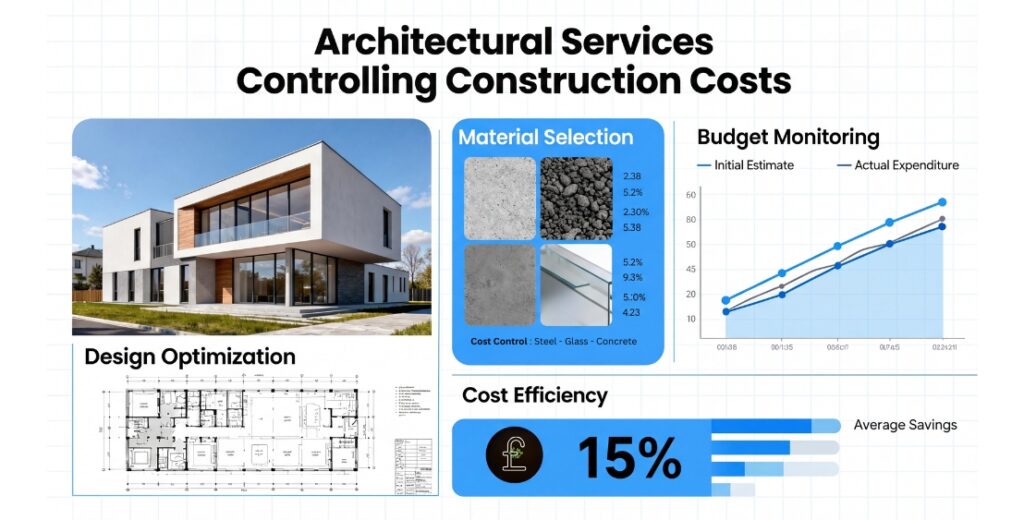
Architectural Services Control Construction Costs.
Proper Budget Planning from Early Stages
Professional architects integrate cost in all their design decisions. This includes evaluating:
- Material specifications.
- Structural systems.
- Building techniques and methods.
Clients get the chance to be informed of realistic costs at the beginning of the project and therefore they are less likely to be faced with unexpected costs and budget overruns in the future.
Reducing Design Amendments that are Costly
Late design change is a significant factor in cost escalation. Good architectural planning helps to:
- Make essential design decisions early.
- Minimise changes after construction begins.
- Avoid wastage and demolition of materials.
- Manage extra labour and variation expenses.
This ensures the project is on track with budgets and schedules.
Effective Space and Material Management
A good architectural design is focused on optimising the usable space, and avoiding unnecessary construction. This includes:
- Streamlined designs and circulation.
- Efficient structural grids.
- Smart, durable detailing.
The outcome is a decrease in material usage, waste, and a long-term cost reduction without affecting the quality or the performance.
Reducing Stress Through Professional Architectural Services.
Single Point of Coordination
Architects act as the central coordinator between:
- Mechanical and electrical engineers.
- Contractors and suppliers.
- Planning authorities and building control.
This will remove the burden from clients of managing multiple stakeholders and resolving technical conflicts.
Risk Identification and Management
Professional architectural services identify potential risks related to:
- Site conditions.
- Regulatory requirements.
- Design feasibility.
- Constructability.
Handling them at the design phase saves on the expensive rework during the construction phase and eliminates uncertainty in the project.
Effective and open communication
Through coordinated drawings, structural details and regular updates, clients remain informed about:
- Project progress.
- Costs and variations.
- Key decisions and approvals.
This transparency builds confidence and guarantees a stress-free and controlled construction process.
Conclusion: Why Investing in Architectural Services.
Architectural services and design are not optional items. They are crucial to the completion of construction projects on time, on budget, and with minimal stress.
Professional architectural planning:
- Saves time through reducing delays and approvals problems.
- Control costs by preventing rework and waste.
- Eases stress with coordination and clear communication.
Selecting experienced architectural services is an investment that will provide value during the process and even after the project has been completed.
Frequently Asked Questions (FAQ’s)
An architect should be appointed at the very start of a project. Early involvement helps define the brief, avoid design changes later, and improve planning approval outcomes.
Architectural services include concept design, planning and construction drawings, consultant coordination, and support during construction. They also cover planning permission and building regulations compliance.
They reduce costs by finalising designs early, coordinating consultants, and producing clear drawings that minimise errors, rework, and unnecessary variations on site.
Architectural fees in the UK typically range from 5% to 12% of the construction cost, depending on project size, complexity, and scope of services.
Related posts:
 Architectural Design Services for Planning Approval in the UK: What You Need to Know
 Ultimate Guide to Choosing the Right Architectural Firm in the UK
 Reveal the Best Architects in the UK: Space Transformation with Style
 How Architects Can Help Prevent You from Making Common Building Errors
 Architectural Design Services That Guarantee Professional Results
Comments are closed